Norda ND21700-4500-3C Grade A 21700 Lithium Cell 3.7V 4500mAh 3C Discharge Competitive Price Cylindrical Battery
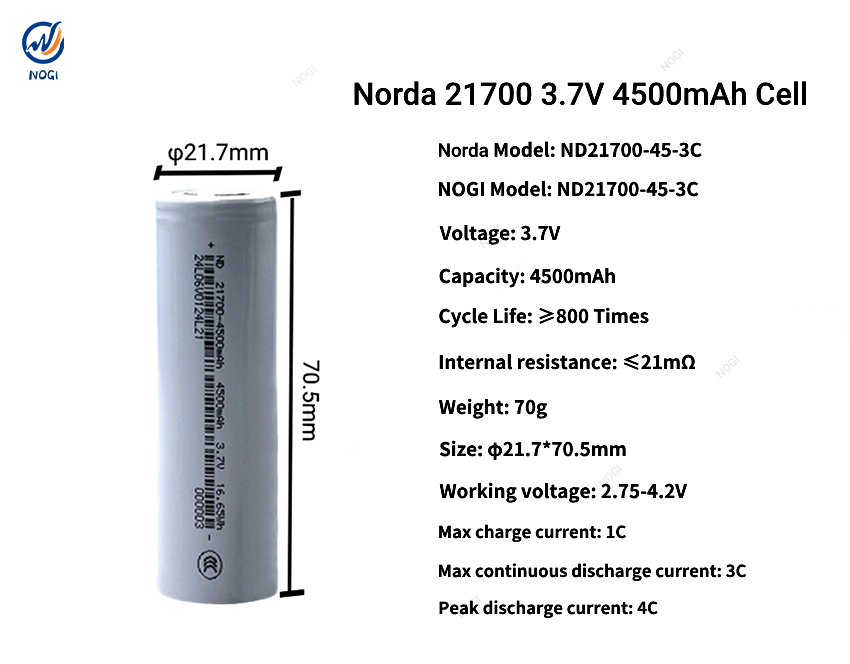
Norda ND21700-4500-3C is a high-capacity 21700 lithium cell rated at 3.7V 4500mAh. This 21700 battery supports 3C continuous discharge and 4C peak discharge, with low internal resistance and over 800 charge cycles. The multi-tab design delivers stable heat performance and consistent batch quality. With competitive price, this Norda 21700 cell suits portable power stations, electric scooters and power tools for various lithium battery pack projects.
1. Cell Specifications
|
Battery Model
|
ND21700-45-3C
|
|
Battery Type
|
Cylindrical 21700 Battery Cell
|
|
Nominal Voltage
|
3.7V
|
|
Nominal Capacity
|
4500mAh
|
|
Charge Voltage
|
4.2V
|
|
Discharge Cut-off Voltage
|
2.75V
|
|
Max Charge Current
|
1C
|
|
Max Continuous Discharge Current
|
3C
|
|
Peak Discharge Current
|
4C
|
|
Internal Resistance
|
≤21mΩ
|
|
Charge Temperature
|
0-45℃
|
|
Discharge Temperature
|
-20-60℃
|
|
Storage Temperature
|
-20-45℃
|
|
Cycle Life
|
≥800 cycles
|
|
Battery Size
|
φ21.7*70.5mm
|
|
Battery Weight
|
69.8g
|
|
Warranty
|
3 Years
|
2. Why Cylindrical Cells?
Cylindrical lithium-ion cells remain a competitive mainstream format thanks to robust mechanical structure, mature automated manufacturing, outstanding cell consistency and inherent cooling channels after packaging.
Enhanced Structural Safety
Cylindrical lithium-ion cells adopt spiral winding construction. The round shape evenly distributes internal pressure, and rigid metal casing accommodates built-in PTC and CID safety devices to prevent deformation and overheating.
Consistent Performance & Scalable Production
Standard sizes including 18650, 21700 and 4680 etc enable fully automated manufacturing. Superior cell consistency optimises the reliability of battery modules and packs.
Efficient Thermal Management for High-Rate Operation
Natural gaps between cells form cooling channels after assembly, effectively mitigating hot spots under high-rate charging and discharging conditions.
Flexible Modular Integration
Adjustable series-parallel configurations support custom battery pack designs for electric vehicles, e-bikes, power tools and stationary energy storage systems.
Controllable Thermal Propagation Risk
Individual cells carry moderate capacity. Energy released during failure is limited, making thermal runaway easier to contain than large-format prismatic cells.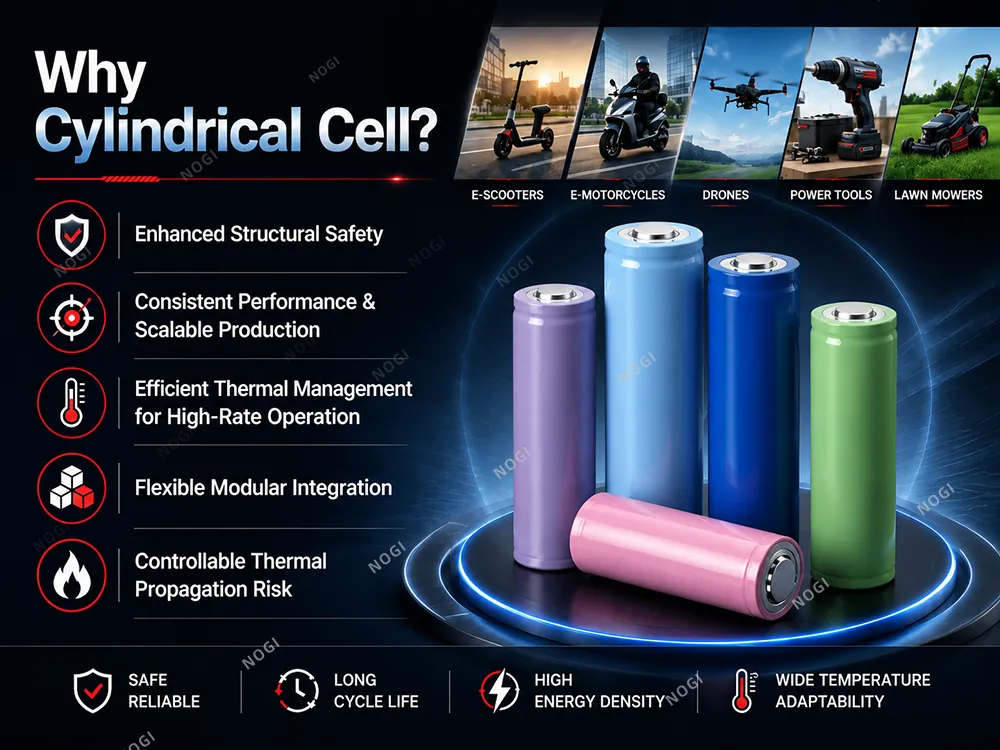
3. Customer Review3. Customer Review
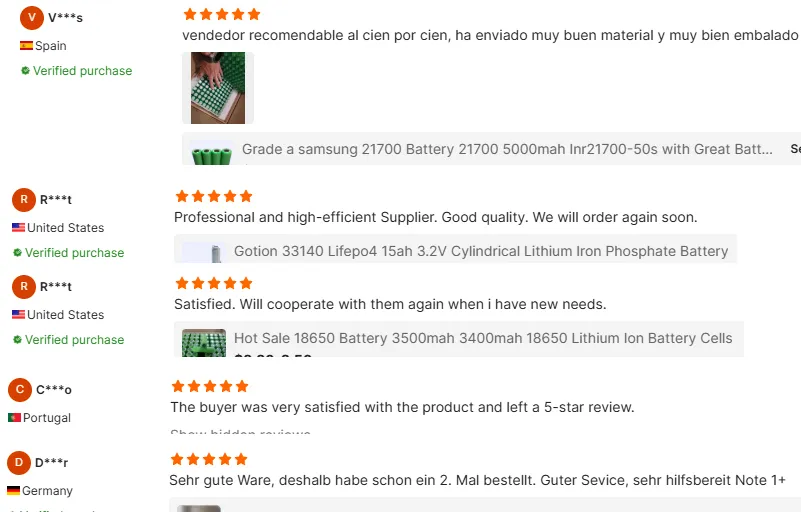
Every acknowledgment from clients fuels NOGIBattery's development. Our team stays dedicated to supplying dependable lithium cells for all partners.
4. Customer FAQ
Q: How do you ensure cylindrical cell quality?
A: Quality is controlled through Grade A cell selection, capacity testing, internal resistance testing, strict sorting, and batch consistency inspection.
Q: What industries use cylindrical battery cells?
A: Cylindrical cells are used across EVs, consumer electronics, industrial equipment, robotics, medical devices, power tools, and renewable energy systems.
Q: What is the difference between high-energy and high-power cylindrical cells?
A: High-energy cells focus on longer runtime and higher capacity, while high-power cells are optimized for fast discharge and demanding applications.
Q: Are cylindrical cells environmentally friendly?
A: Lithium-ion cylindrical cells support clean energy applications by enabling electric transportation and renewable energy storage. Responsible recycling helps reduce environmental impact.
Q: How should cylindrical cells be stored?
A: Cylindrical cells should be stored in a dry, cool environment at partial charge levels, avoiding high temperatures and direct sunlight.
Contact us: Wechat/WhatsApp: +8613528488114 Email: sales@nogibattery.com


