Ternary Battery vs. Lithium Iron Battery: What's the Difference?
1. What is NMC battery & Lifepo4 battery?
NMC (Lithium Nickel Manganese Cobalt Oxide) battery is a type of lithium-ion battery that uses a combination of Nickel, Manganese, and Cobalt in its cathode. It is a popular choice for electric vehicles and other high-energy applications due to its high energy density. NMC batteries offer a balance between energy density, power capability, and safety, making them suitable for various applications requiring high performance and reliability.
BTW, We often hear NMC 811 talking, which means that the ratio of nickel, cobalt and manganese is roughly 8:1:1.
LiFePO4 (Lithium Iron Phosphate) battery is one type of lithium-ion battery that uses iron phosphate as its cathode material. It is known for its high energy density, long cycle life, and excellent thermal stability. LiFePO4 batteries are commonly used in applications that require high-power output, such as electric vehicles, renewable energy storage systems, and portable electronics. They are considered safer than other lithium-ion battery chemistry due to their lower risk of thermal runaway and reduced sensitivity to temperature changes. Additionally, LiFePO4 batteries have a longer lifespan and can withstand a higher number of charge-discharge cycles compared to other lithium-ion batteries.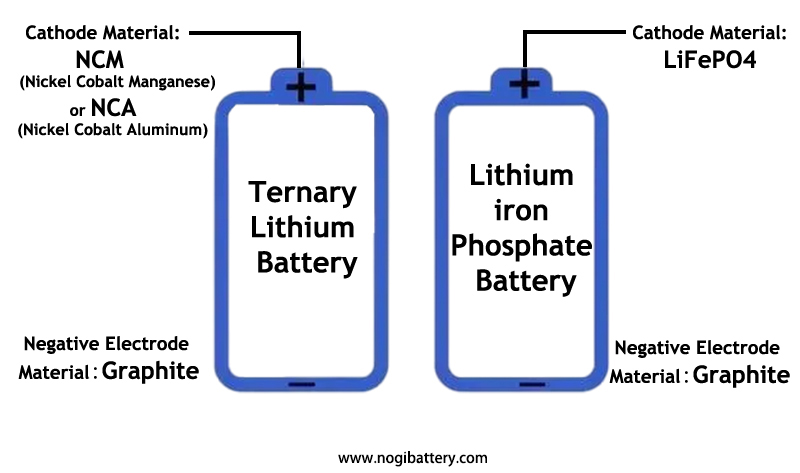
2. NMC battery VS Lifepo4 battery
Is NMC battery or lifepo4 battery better? Actually, we need to consider more which one is more suitable for you. We can consider from some below factors: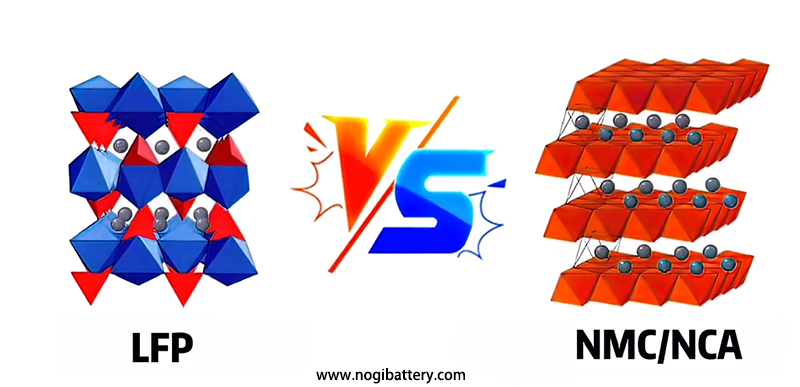
Energy Density: NMC batteries generally have a higher energy density compared to LiFePO4 batteries. This means that NMC batteries can store more energy in a given volume or weight, making them suitable for applications that require higher energy storage capacity.
Cycle Life: LiFePO4 batteries have a longer cycle life compared to NMC batteries. LiFePO4 batteries can typically withstand thousands of charge-discharge cycles, while NMC batteries usually have a shorter lifespan.
Safety: LiFePO4 batteries are considered to be safer than NMC batteries. LiFePO4 chemistry has a higher thermal stability and is less prone to thermal runaway or combustion, making it a preferred choice for applications where safety is a primary concern.
Cost: LiFePO4 batteries are generally more cost-effective compared to NMC batteries. However, there will be some price fluctuations at different period. For example: In 2022-Year, the lifepo4 battery price is high, price keeps increasing, but in 2023-Year, lifepo4 battery price goes down a lot; While NMC batteries price is relatively stable in those 2 years.
Applications: NMC batteries are commonly used in electric vehicles, power tools, and portable electronic devices due to their high energy density. LiFePO4 batteries are often utilized in renewable energy storage systems, solar power systems, and applications where safety and long cycle life are crucial.
|
NMC Battery VS Lifepo4 Battery
(Generally Status)
|
||
| Performance | NMC Battery | Lifepo4 Battery |
| Energy Density | ✬ ✬ ✬ ✬ | ✬ ✬ ✬ |
| Thermal Safety | ✬ ✬ ✬ | ✬ ✬ ✬ ✬ |
| Cycle Life | ✬ ✬ ✬ | ✬ ✬ ✬ ✬ |
| Low Temperature Performance | ✬ ✬ ✬ ✬ | ✬ ✬ ✬ |
| Cost | ✬ ✬ ✬ ✬ | ✬ ✬ ✬ |
| Consistency | ✬ ✬ ✬ ✬ | ✬ ✬ ✬ |
| Overcharge Performance | ✬ ✬ ✬ | ✬ ✬ ✬ ✬ |
| Environmental Friendly | ✬ ✬ ✬ | ✬ ✬ ✬ ✬ |
Ultimately, the choice between NMC and LiFePO4 batteries depends on the specific requirements of the application, including energy density, cycle life, safety, and cost considerations.
More details of lithium ion batteries, please contact us by:
Wechat/WhatsApp: +8613528488114 Email: sales@nogibattery.com
Website: www.nogibattery.com