By NOGIBATTERY | 17 June 2026 | 0 Comments
Advantages and Disadvantages of LiFePO₄ (Lithium Iron Phosphate) Batteries
Advantages and Disadvantages of LiFePO₄ (Lithium Iron Phosphate) Batteries
I. Core Advantages
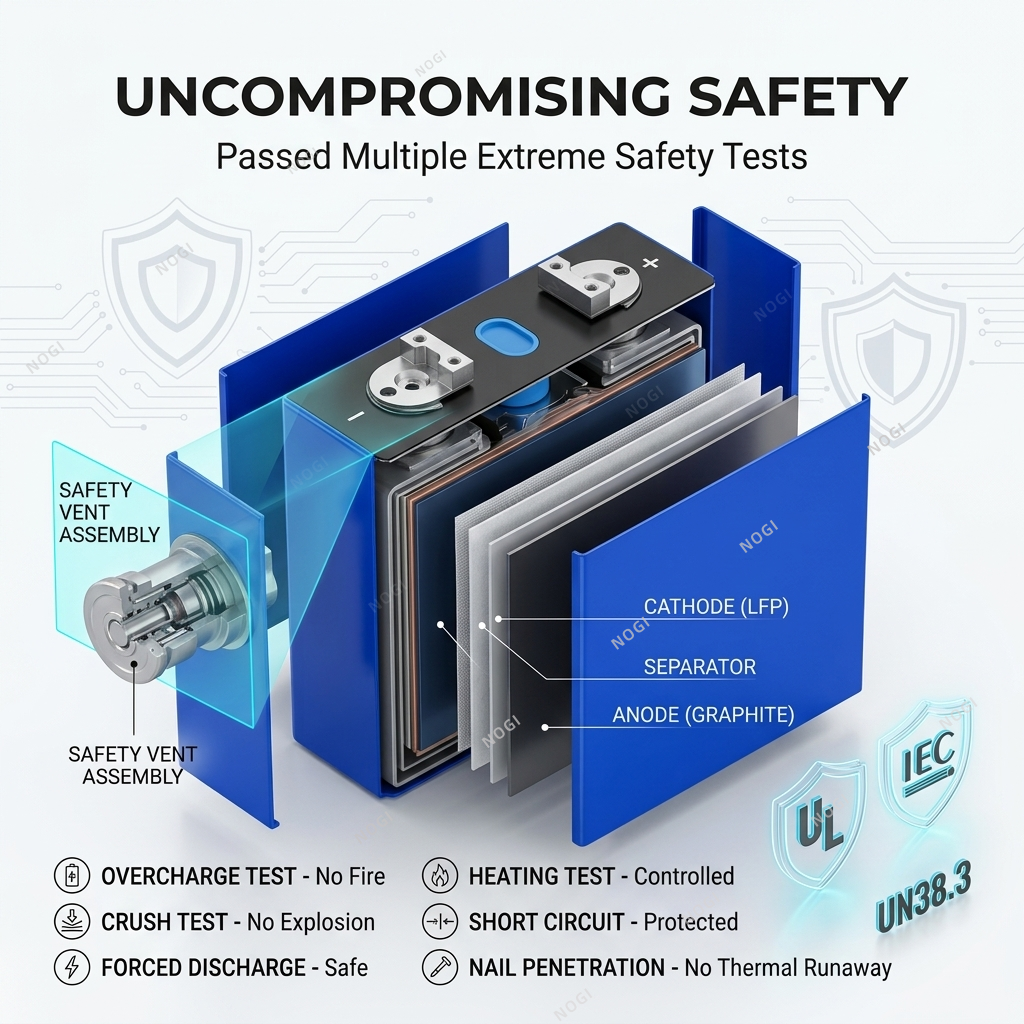
1. Outstanding Safety & Thermal Stability
No risk of thermal runaway, fire, or explosion under puncture, short circuit, overcharge, or high temperature. LFP cathode does not release oxygen when heated, avoiding violent combustion. Much safer than ternary lithium (NCM/NCA), ideal for energy storage, RVs, home power, and electric vehicles.
2. Ultra-Long Cycle Life
Standard: 3,000–6,000 full cycles; high-quality cells exceed 8,000 cycles. After thousands of cycles, capacity retention remains above 80%. Far longer than ternary lithium (1,000–2,000 cycles) and lead-acid (300–500 cycles), lowering long-term replacement cost.
3. Stable Chemistry & Structural Integrity
Stable olivine crystal structure minimizes capacity degradation over repeated cycling. Low self-discharge rate (2–3% per month); can be stored for months with little power loss.
4. Environmentally Friendly
No toxic heavy metals (cobalt, nickel); uses abundant, non-toxic iron and phosphate.Easy to recycle, low pollution in production/disposal, compliant with global environmental regulations.
5. Flat Discharge Voltage & High Efficiency
Flat discharge voltage plateau (~3.2V per cell) provides consistent power until nearly empty.Round-trip energy efficiency ≥95%, much higher than lead-acid (70–80%), reducing energy loss.
6. Low Maintenance & Deep Discharge Tolerance
Supports deep discharge down to 0% without severe damage (lead-acid degrades rapidly below 50% DoD). No water refilling, no acid leakage, no regular maintenance.
8. Declining Raw Material Cost
Iron and phosphorus are abundant and cheap; no reliance on scarce cobalt/nickel. Mass production continuously drives down unit cost.
II. Main Disadvantages
1. Lower Energy Density
Volumetric and gravimetric energy density is 30–40% lower than ternary lithium. For the same capacity, LFP batteries are heavier and bulkier, limiting use in lightweight long-range passenger EVs and compact portable devices.
2. Poor Low-Temperature Discharge Performance
Capacity drops sharply below 0°C: at -20°C, only 60–70% of rated capacity is available. Cold regions often require extra heating systems (e.g., self-heating BMS), increasing system cost and energy consumption.
3. Lower Nominal Voltage per Cell
Single cell nominal voltage: 3.2V (vs. 3.6–3.7V for ternary lithium).Requires more cells in series to reach the same system voltage (e.g., 4S for 12.8V nominal), increasing BMS design complexity.
4. Slow Charging in Extreme Cold
Charging below 0°C (32°F) without heating causes permanent damage (lithium plating).Fast charging not recommended near freezing; low temperature slows lithium-ion migration, extending charge time.
5. Higher BMS Requirements for Large Packs
More series-connected cells require more precise balancing circuits in the BMS. Unbalanced cells accelerate overall capacity degradation.
6. Slightly Lower Peak Power Output (for some cells)
Internal resistance is somewhat higher than high-power ternary cells. Less suitable for ultra-high-power instantaneous output (e.g., high-performance sports cars, some power tools), though high-discharge LFP cells exist.
7. Higher Upfront Cost vs. Lead-Acid
Initial cost is still 2–3 times higher than lead-acid for similar capacity.
However, total cost of ownership over lifespan is far lower due to long cycle life.
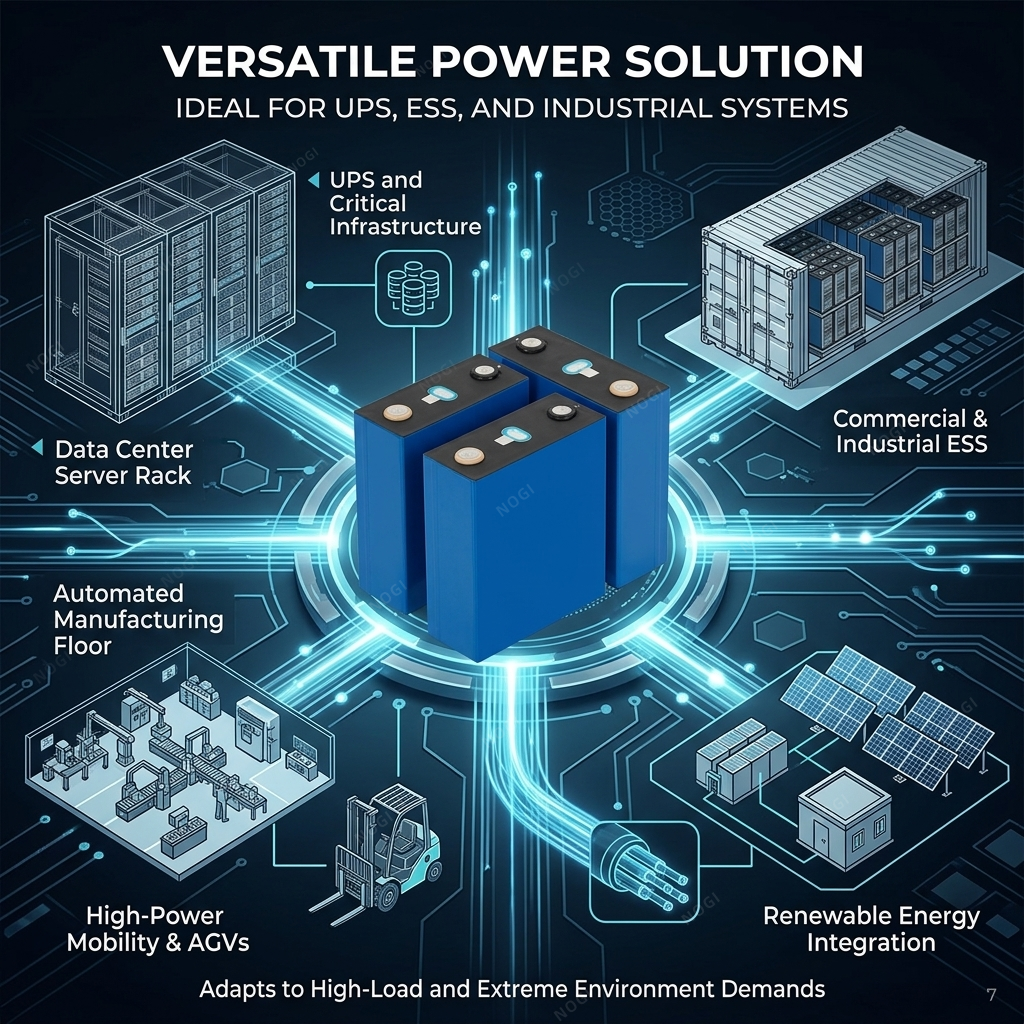
III. Best Applications for LiFePO₄
Solar home battery storage
Golf carts, RVs, marine trolling motors
Off-grid power systems
Electric forklifts and pallet jacks
UPS (Uninterruptible Power Supplies)
Stationary energy storage
Short-to-medium range electric vehicles and buses
IV. When to Avoid LiFePO₄
Need extremely lightweight, compact batteries (e.g., smartphones, racing drones)
Device expects precise 3.7V per cell without a BMS
Routine charging below freezing without a self-heating battery or warm environment
Very low upfront budget and short-term use (though long-term ownership favors LFP)
Summary Comparison Table
| Feature | LiFePO₄ | Lead-Acid | NMC (Ternary Li-ion) |
|---|---|---|---|
| Safety | Excellent | Fair (vents acid, no fire) | Moderate (fire risk) |
| Cycle Life | 3,000–10,000+ | 300–500 | 1,000–2,000+ |
| Energy Density | Medium | Low | High |
| Cold Charging (0°C) | Poor (needs heating) | Fair | Fair |
| Upfront Cost | Medium-high | Low | Medium-high |
| Lifetime Cost | Very low | High | Medium |
| Cobalt Required | No | No | Yes |
| Maintenance | None | Regular (water, corrosion) | Low |
One-Line Pros & Cons
| Pros | Cons |
|---|---|
| ✅ Extremely safe (no fire/explosion) | ❌ Heavier and larger |
| ✅ Lasts 3,000–10,000+ cycles | ❌ Poor charging below 0°C (32°F) |
| ✅ No cobalt or toxic metals | ❌ Lower energy density |
| ✅ Low maintenance, deep discharge OK |
Leave a Reply
Your email address will not be published.Required fields are marked. *